
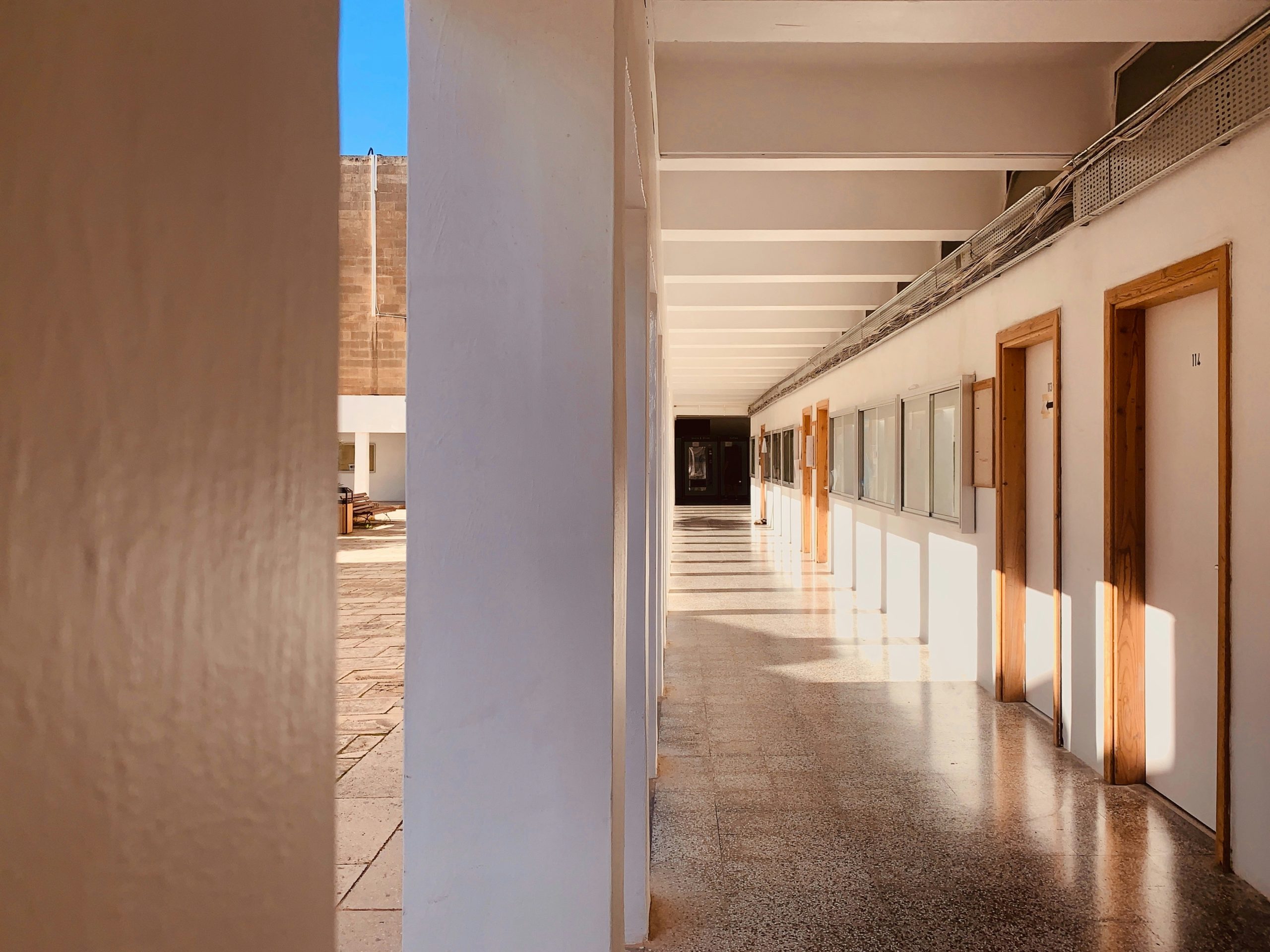
The office opens at ten.
Not every day, obviously. That would be unreasonable.
Tuesdays. Ten until twelve.
There is a notice on the university website explaining this, although finding it requires clicking through three departments, an outdated PDF and a page labelled Student Services that appears to have been last updated during a previous administration.
The notice says Office Hours: Tuesday, 10:00–12:00.
It does not say which Tuesday.
This turns out to matter.
The First Visit
The document is straightforward enough.
A stamped confirmation that a degree was completed. Nothing complicated. The university already has the information. It issued the degree in the first place.
But the organisation requesting the document needs an original with an official stamp.
Not a scanned copy.
Not the certificate itself.
A separate piece of paper confirming that the certificate is genuine.
So Tuesday is arranged.
A morning off work. A bus journey. A walk across campus past buildings that look exactly as they did five years ago, except that the coffee is now twice the price.
At 10:17, the office door is locked.
A handwritten note has been attached with blue tape.
Staff training. Please return next week.
There is no date on the note.
The Second Tuesday
The following week, the office is open.
This feels like progress.
There are six people waiting outside and a seventh standing at the counter, explaining something involving a transcript, two surnames and a missing signature.
The person behind the counter listens patiently.
Then says the document needs to be requested online.
Someone in the queue asks why the website says to visit the office.
The answer is that the website hasn’t been updated.
This seems reasonable to everyone except the people who have taken time off work to be there.
The online request takes four minutes.
There is a confirmation email.
Your request has been received. Please allow 10–15 working days for processing.
Nobody knows whether Tuesdays count differently.
The Third Tuesday
Eleven working days later, another email arrives.
The document is ready for collection.
There is a reference number, a reminder to bring identification and a sentence in bold explaining that documents cannot be collected by another person without written authorisation.
This is fine.
Another Tuesday is arranged.
At the office, the reference number is checked. The identification is checked. A drawer is opened.
The document is not there.
The person at the counter looks in a second drawer.
Then a filing cabinet.
Then asks a colleague.
The colleague remembers the document. It was definitely prepared.
Unfortunately, it appears to have been sent to another department for a signature.
That department is in a different building.
Its office hours are Thursday afternoons.
Nobody Is Particularly Unhelpful
This is the strange part.
Nobody is rude.
Nobody refuses to assist.
The person at the counter is apologetic. The colleague in the other building is apparently very efficient. The online system has worked exactly as intended.
Every individual involved seems to be doing their job.
Yet the document remains unavailable.
It is tempting to blame somebody, but there is no obvious candidate.
The university has a process.
The process has several stages.
Each stage has its own timetable.
And somewhere between those timetables, a person who simply needs a stamped piece of paper has lost three mornings and a considerable amount of patience.
The Deadline Nobody Can Move
The organisation requesting the document has its own timetable.
Its deadline is Friday.
This creates an interesting situation.
The university can take fifteen working days to produce a document, but the organisation receiving it may allow only five days for submission.
Neither institution considers this a contradiction.
One is following its administrative procedures.
The other is maintaining its application deadline.
The person caught between them is expected to make the two systems agree.
There are similarities here with the document nobody warns you about until the last week, when something apparently minor becomes the final obstacle to an otherwise complete application.
The difficulty is rarely the document itself.
It is everything required to obtain it.
Thursday Afternoon
On Thursday, the second department is open.
The building is further away than expected.
The office is on the fourth floor.
The lift is out of service.
At 15:26, the document is finally located.
It has the correct name, the correct degree and the correct dates.
It also has the wrong stamp.
The staff member notices this before handing it over.
There is a short silence.
Then a conversation about whether the original office might still be able to help.
It cannot.
It is Thursday.
The Email
That evening, an email is written to the organisation requesting the document.
It explains the situation.
The university has prepared the confirmation. The final administrative step is pending. Could the deadline be extended by a few days?
The email is polite.
It includes the reference number, the original request date and the university’s confirmation that the document is being processed.
Then comes the familiar uncertainty.
Will somebody reply?
Will the explanation be accepted?
Will the application be considered incomplete?
This is the part described in the waiting period nobody prepares you for. Once the email has been sent, there is very little left to do except check for a response.
And then check again.
What the Office Hours Don’t Explain
A university office opening for two hours a week may make perfect sense internally.
Perhaps the staff have teaching responsibilities. Perhaps they work across departments. Perhaps most requests are handled online and the Tuesday window exists only for exceptional cases.
There may be excellent reasons.
But from the other side of the counter, the arrangement looks rather different.
The applicant sees a deadline.
The university sees a procedure.
The employer or scholarship provider sees a missing document.
Each sees only its own part of the process.
Nobody sees the three mornings off work, the journeys across town or the growing collection of confirmation emails.
Those costs do not appear on any form.
They are not included in the application fee.
They are simply absorbed by the person trying to move forward.
The Following Tuesday
The correct document is finally ready.
The office opens at ten.
This time, the journey takes forty minutes. There is no queue. The person behind the counter recognises the name.
The document is handed over.
One sheet of paper.
One signature.
One stamp.
The whole exchange takes less than a minute.
Outside, the campus is busy. Students are walking between lectures. Somebody is selling coffee from a small cart near the library.
Everything looks perfectly ordinary.
The document goes into a folder, then into a bag.
There is still time to scan it and send it before lunch.
The university has completed its process.
The application can continue.
And somewhere on the university website, the office hours still say Tuesday, ten until twelve.